SOULSKIPPER combines mobile system development with Augmented Reality, sensor technology, Big Data and real-time AI. NOMAD bundles these capabilities for on-site and remote applications. FABS AI forms an independent wellness and research development. For investors, four interconnected fields with differing stages of development and business perspectives are considered.
Four fields. One technological line of development.
01
NOMAD · Mobile systems
Modular case platform for communication, sensor technology and edge AI: with prospects for municipalities, large enterprises, state civil protection and medical support. Historical trials form the basis of experience; current configurations must be assessed separately.
Glasses, remote support and AI-assisted training connect specialist knowledge with the place of use. Fields of application range from industrial and medical processes to support for authorities and skilled personnel.
In-house development of data processing and interfaces for sensors, video, audio and position data. SAP and Palantir are part of the described integration environment; this does not imply any current partnership with these providers.
Independent concept for an open lounger for electromagnetic stimulation, sound and vibroacoustics. Investment steps concern the prototype, sensor technology and scientific review; medical efficacy and approval are not assumed.
Investors and development partners are being sought for clearly defined projects in these four fields. Possible business models include modular systems, software licenses, project-related integration, training and accompanying services. Which components are economically viable must be examined for each project with target customers, development budget and measurable milestones. A joint funding requirement or investment terms have not yet been determined.
NOMAD AI · Experience from case development
Tested in demanding environments.
Today's case development builds on earlier practical test runs. According to the founder, successful tests were carried out with Airbus in Hamburg, Pfizer in Freiburg and the Technisches Hilfswerk in Germany. The following examples describe this historical development experience.
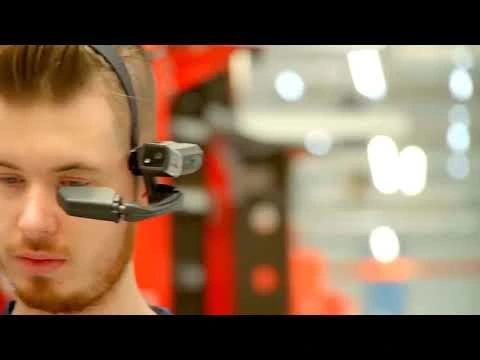
Airbus · Hamburg
One test run was dedicated to quality control in door manufacturing. According to the founder, the trial was carried out successfully.
In the environment of pharmaceutical production, the case was tested for AI-assisted final inspection after the cleaning of cleanrooms. According to the founder, the test was successful.
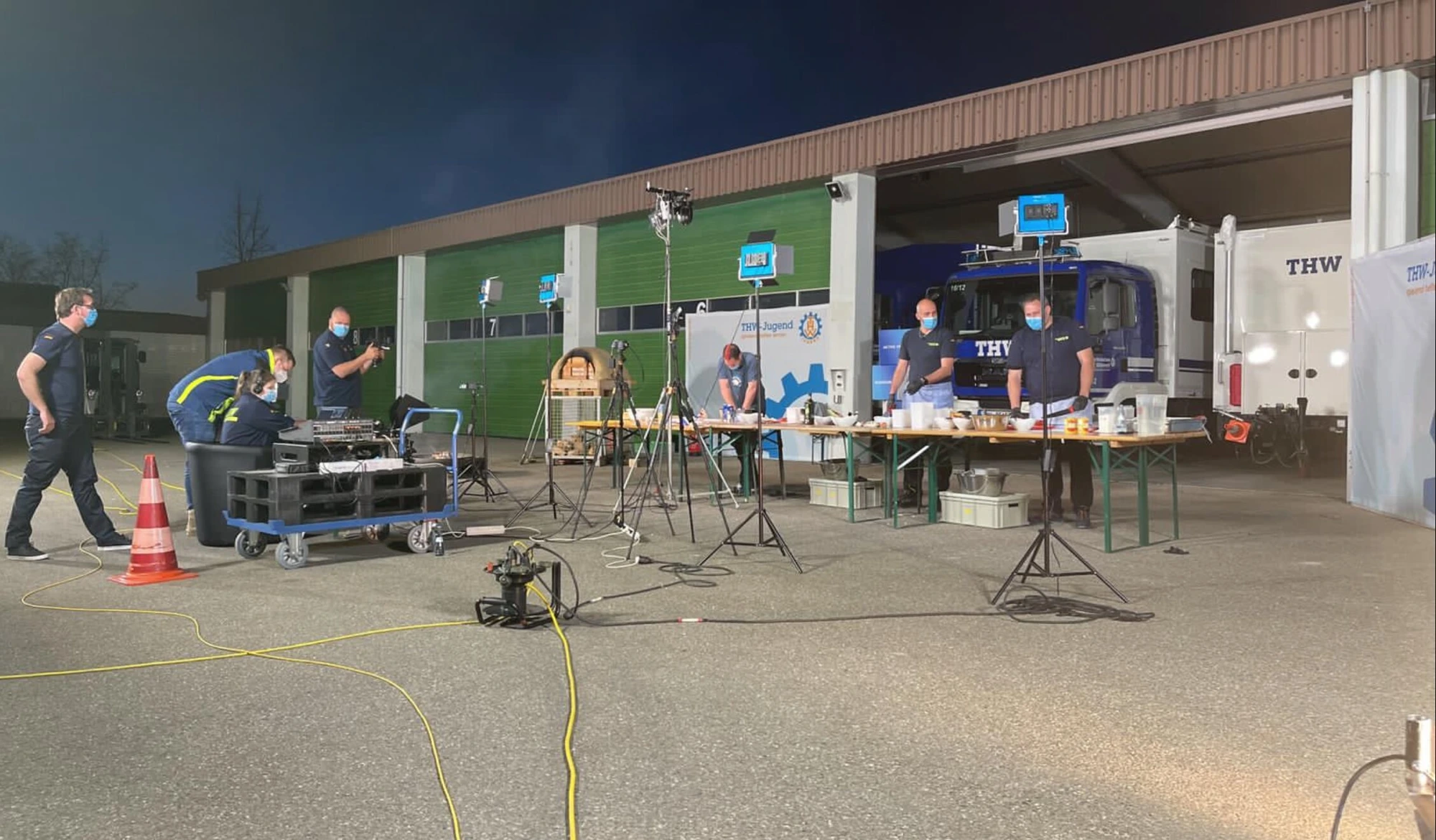
Another successful test run, according to the founder, took place with the Technisches Hilfswerk in Germany, with the involvement of its Freiburg office.
Earlier development and test phase at Technisches Hilfswerk Freiburg.
Pfizer test: proving itself under special environmental conditions
A particular challenge, according to the founder, was the high temperature, the very high humidity and various chemicals in the ambient air. The case version used had to withstand these loads.
For these requirements, according to project information, a special battery was developed. There were also specially selected displays and a custom-made unit using a particular stainless steel alloy. According to the founder, the case successfully withstood the conditions described in the test run.
This experience relates to the version used at the time and the test conditions there. It does not describe general resistance to arbitrary chemicals and does not replace testing of other equipment or operating limits.
Medical research · Development experience
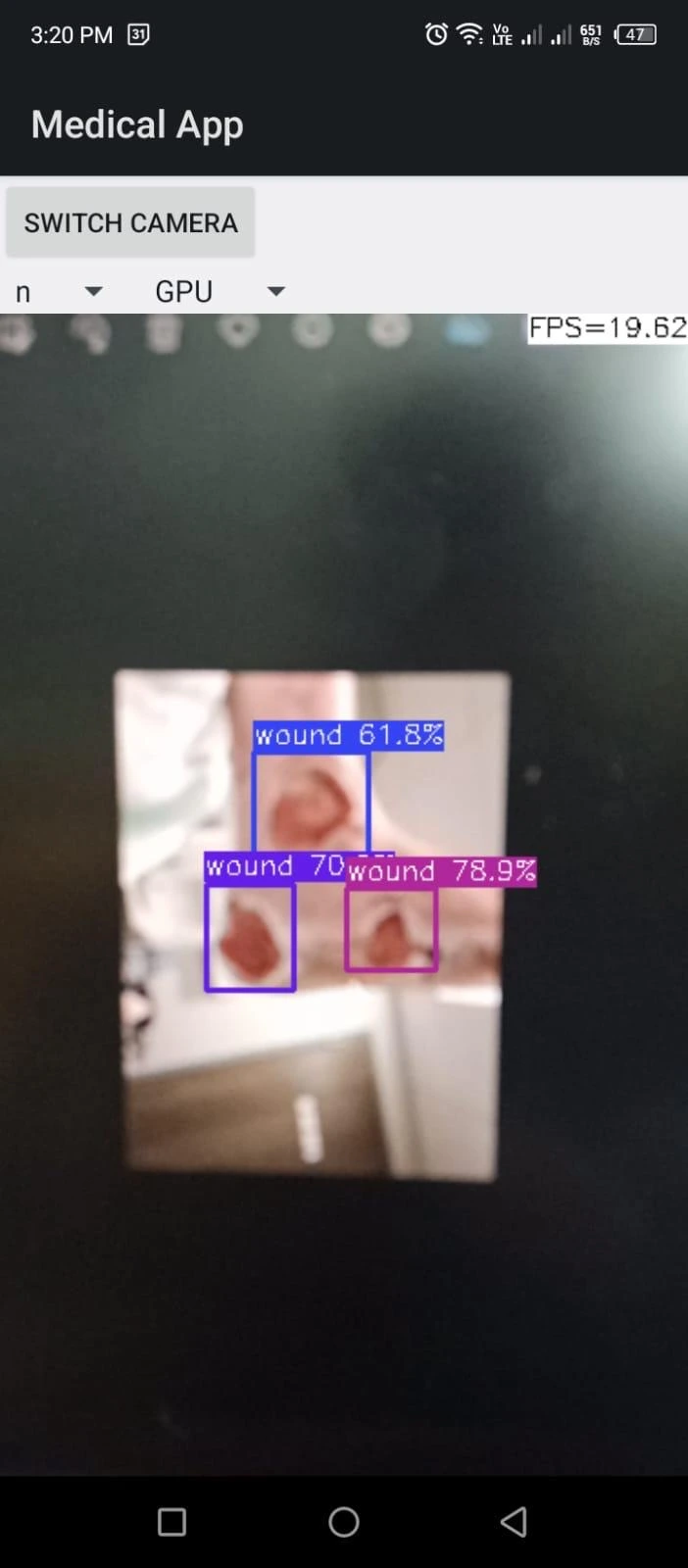
AI-assisted wound detection and wound care
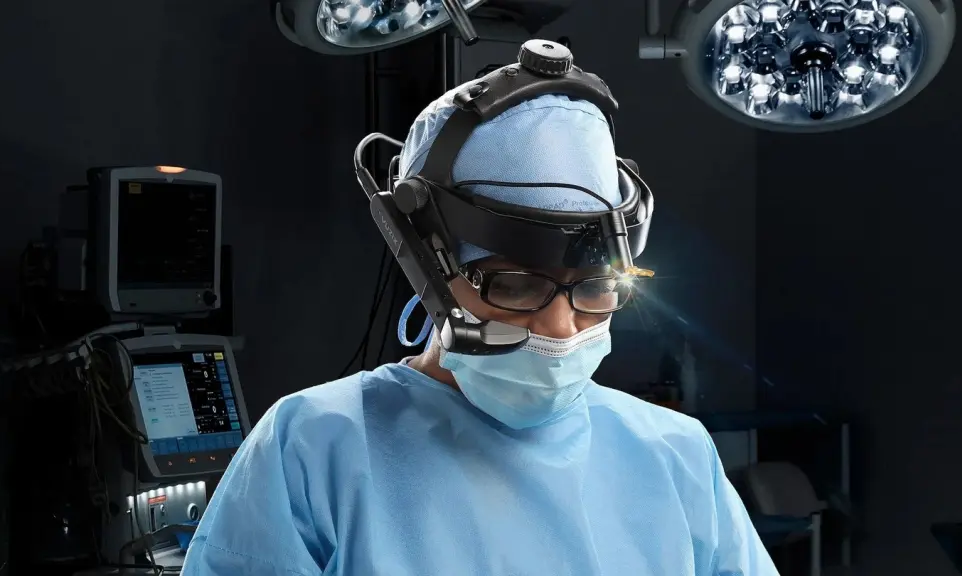
Smartglasses in a medical setting · illustrative imageProject image of AI-assisted wound detection. Partly made unrecognizable for ethical reasons; according to the developer, the underlying original images are available in very high quality.
The most recent larger medical research project in which LJUBOMIR FILIPOVIĆ was significantly involved examined the foundations of AI-assisted wound detection and wound care. According to him, one of Germany's largest care service providers and the Charité university hospital were involved.
As chief developer he was responsible for hardware development and the implementation of the AI software. Together with the participating scientists, he worked on AI functions intended to support care assistants and trained nursing staff in caring for people at home.
The aim was to capture image data on site as a basis for a diagnostic assessment, to involve medical expertise via telemedicine and, with the support of AI, to create automated care documentation. The professional assessment by physicians remained a central part of the approach.
His development work also included optical systems, including special high-resolution cameras. The project thus combines mobile hardware, image processing and medical support over distance – experience that is part of the development history of the case.
Classification: The information on these test runs comes from the founder. Dated test reports, measurement logs and written confirmations were not submitted for this preview. The organizations named are not presented as current partners, customers or supporters of SOULSKIPPER. The experience relates to case development; it is not proof of efficacy or validation for FABS AI.
AR and data platforms as independent business fields
Alongside the device, the focus is on in-house software and integration work: AI-assisted knowledge transfer, remote support, real-time analysis and traceable documentation. Previous project experience in demanding environments forms the basis. New applications for industry, medicine, authorities or civil protection each require a defined task, appropriate access rights, a security architecture and project-related validation.
Possible next investment steps are the selection of a specific pilot case, a stocktake of usable in-house technology, an integration demonstrator and a verifiable pilot operation. Agreed software, integration or service offerings can emerge from this. Scalability depends on architecture, data volumes, infrastructure and the requirements of the respective deployment.
FABS AI · Independent development and research planning
The starting point for a conversation
FABS AI is at the beginning of its development. Partners are being sought who would like to help shape the build-up of a research prototype, the technical review and further business development. The planned model combines devices, software and accompanying services.
A concrete capital requirement and investment terms have not yet been determined. The funding requirement depends, among other things, on which objective is pursued first: this includes the technical development and the costs that would be required for at least two possible patent applications relating to FABS AI. Strategic orientation is equally decisive. An early path to medical device approval requires additional testing, documentation and financial resources. Alternatively, an investor can initially support a wellness and premium positioning without pursuing medical approval as the first market goal. The next steps are to be agreed on the basis of a comprehensible cost and milestone plan.
FABS AI · Economic perspective
Device, software and accompanying services
The intended business model comprises several possible building blocks: the provision of FABS AI systems, supplementary software functions as well as training, maintenance and support for professional users. Licensing and strategic collaboration are also considered as options.
These approaches describe the planned business development. They are not associated with statements about existing revenues, completed customer contracts or market maturity already achieved.
FABS AI · Scientific background
Understanding research. Investigating effects in a targeted way.
Scientific studies exist for electromagnetic stimulation, sound and mechanical vibrations, and they provide important starting points. However, no generally valid “healing frequencies” can be derived from them. Decisive factors include, among others, frequency, intensity, time course and duration of the application as well as the tissue examined. For FABS AI, this research forms a starting point for its own investigations.
What cell studies show
A systematic review of 92 publications on pulsed electromagnetic fields, PEMF for short, describes measurable reactions in cell cultures. Whether and how cells react depends substantially on cell type and application parameters. Such laboratory results help to develop research questions; they do not yet demonstrate a therapeutic effect in humans.
The clinical evidence on PEMF differs depending on the application. A meta-analysis on knee osteoarthritis with nine randomized studies and 457 participants reports time-dependent improvements in individual symptoms, but no consistently clear results. Differing treatment protocols and a high risk of bias make robust conclusions difficult; moreover, statistical improvements need not be noticeable in everyday life.
Repetitive transcranial magnetic stimulation (rTMS) works with targeted magnetic pulses at specific brain regions. It is an independent medical procedure with defined safety requirements. Its results and treatment settings cannot simply be transferred to a full-body lounger. FABS AI is not equated here with a clinically tested rTMS system.
Considering sounds and vibrations in a differentiated way
A systematic review on whole-body vibration for non-specific back pain reports improvements in several studies, but emphasizes the differing applications and the need for standardized investigations. Such results cannot automatically be transferred to the vibroacoustics of a lounger. Audible sounds, music, binaural beats and mechanical vibrations are also different procedures. With binaural beats, a difference in perception arises from two audible tones that are delivered separately to the ears; this is not the same as a physically emitted low tone.
Our research question is whether individual reactions can be better understood on the basis of objectively recorded body signals and whether applications can be adapted more precisely within safety limits defined in advance. The planned AI is intended to evaluate several influencing variables together for this purpose, instead of merely selecting a single frequency. A dedicated, systematically built parameter and measurement database is intended to support this approach.
This is a development and research goal, not an advantage that has already been demonstrated. The safety and a possible therapeutic benefit of the overall system must be examined in its own investigations. Results from cell cultures or studies with other devices do not replace this evidence. Technical details of the implementation are discussed in confidential conversations.
FABS AI · Tesla and Lakhovsky · Possible later research direction
Historical foundations. New questions for research.
Historical patent specifications and third-party patent publications are research sources. They are not proprietary rights of SOULSKIPPER and not proof of efficacy. Applications are being considered for the two in-house developments; a filing or grant is not claimed here.
Tesla and Lakhovsky · Historical technical impulses
Nikola Tesla's work on resonant high-frequency circuits is part of the history of electrical engineering. Electrical energy is exchanged between a capacitor, which stores energy, and a coil. This produces rapid electrical oscillations. For FABS AI, this technical background is interesting as a starting point for possible further research questions.
Georges Lakhovsky: considering several frequencies together
A further historical impulse comes from the work of the inventor Georges Lakhovsky, who was active in France. His multi-wave oscillator describes a device that generates several electromagnetic wavelengths using open rings of different sizes arranged inside one another. Behind this is the technical idea of exciting different resonances together: conductive structures respond to different electrical oscillations depending on their design.
French patent FR732276A and the US patent US1962565A granted in 1934 document this approach. A later work, US2351055A from 1944, describes a tube construction for generating or transmitting several wavelengths and a more compact device design. The more recent patent publication EP2862596A1 also takes up Lakhovsky's multi-wave antenna in an application concept.
For FABS AI, a possible research question can be derived from this: how do bodily reactions differ with individual frequencies compared with defined combinations? This question connects the historical technical approach with the planned recording and evaluation of individual body signals. It is our classification for possible later research, not an already confirmed function or effect of FABS AI.
Historical inspiration, independent development
FABS AI is designed as an independent research platform. The intended copper coils generate time-varying electromagnetic fields; loudspeakers generate sound, and structure-borne sound transducers transmit mechanical vibrations via the lounger. These different influences are combined with one another in a programmable way and examined together with the recorded body signals. The possible development value lies in their coordinated interaction, the evaluation of individual reactions and controlled adaptation under human supervision.
Electrical and acoustic frequencies must be distinguished here: even at the same frequency number, an electromagnetic field is something different from a sound wave. The stimulation forms intended for FABS AI are therefore not to be equated with the historical high-frequency multi-wave oscillator. Tesla and Lakhovsky provide technical impulses; replicating their devices is not the development goal.
Lakhovsky's historical ideas about biological resonance and therapeutic applications are classified here as hypotheses. The patent specifications mentioned do not replace clinical evidence. Adopting his device design has not been decided; possible extensions would be examined separately for safety, traceable measurability and existing proprietary rights.
FABS AI initially focuses on electromagnetic fields, sound and perceptible vibrations. The recording of body signals and their evaluation by artificial intelligence are intended to help investigate individual reactions and adapt the application within program limits defined in advance. These components form the intended focus of the first research prototype.
Four functional areas, one programmable platform
FABS AI is being developed as a lounger that combines several stimulation forms. “Multimodal” here means: electromagnetic fields, sound and mechanical vibrations are brought together in a shared research platform.
Electromagnetic stimulation: Copper coils arranged spatially in the head, side and foot areas generate time-varying electromagnetic fields.
Sound and structure-borne sound: Loudspeakers and suitable sound transducers enable acoustic effects and perceptible mechanical vibrations.
Central control: An intended control unit coordinates the settings and timing of the different components within defined limits.
Program guidance: Software connects program selection with the course of the application and the recording of body signals. The planned AI supports their evaluation and supervised adaptation.
For investors, the development of a programmable platform is therefore relevant: hardware, control and evaluation are considered as a connected system. On the basis of thorough patent searches already carried out, the founder estimates the probability of a patent grant for two independent developments within FABS AI as very high. A patent attorney has not yet been commissioned. The specialist legal review and drafting of the patent applications are planned for the next development round, financed by investors.
High frequency as a separate perspective
An additional research direction could be the investigation of resonant high-frequency fields. Such an extension is so far not a defined component of the first prototype. It would be examined as an independent later development stage, with separate review of technical feasibility, safety and a possible medical benefit.
Classifying existing patents carefully
Historical patents already describe electrotherapeutic devices with Tesla coils. More recent patent publications also deal with Tesla coils for cell stimulation or with frequency-controlled therapy devices. These documents are relevant for research into the prior art; in themselves they are not scientific proof of efficacy.
Before a high-frequency extension is concretely developed, an in-depth patent-law review is planned. This must examine the respective patent claims, the current legal status and possible third-party proprietary rights. Whether an in-house development is patentable and whether it can be implemented without infringing third-party rights are two separate questions. The linked documents form a starting point for research and do not replace this review.
Product concept and visualizations, a described development direction and an intended business model for FABS AI. For NOMAD there is a separate development history documented by historical images.
Planned evidence
Build and trial of a research prototype, technical validation and initial scientific investigations. The documents available do not yet demonstrate completion of these steps.
To be specified in conversation
Cost model, capital requirement, timeline, measurable milestones and possible investment or cooperation terms.
What progress funding is intended to enable
For FABS AI, the planning provides for work steps that build on one another. Scope, sequence and funding are to be determined on the basis of concrete development goals.
Develop technology and softwareIntegrate the intended components, test their interaction and further develop the software.
Build a research prototypeBring the concept together in a testable and demonstrable platform.
Review function and research approachInvestigate technical reliability and prepare initial trials that can be scientifically evaluated.
Prepare further implementationBased on the results, plan quality assurance, later pilot production and possible market access routes.
A concrete funding amount has not yet been determined. It is to be derived from the cost model, the priorities and the agreed milestones.
Collaboration
Capital, expertise and development partners
For FABS AI, investors, strategic partners, development partners and parties interested in possible licensing are being sought. Beyond funding, this is about collaboration on the path from concept to a verified technology platform.
For NOMAD AI, the mobile deployment scenarios described in their own project area are the focus. We conduct conversations about this product line separately; the FABS funding plan is not automatically a plan for NOMAD AI.
Confidential exchange
Understand the perspective. Discuss details in a targeted way.
The protection of technology, brand, design and technical knowledge is part of the planned corporate development. Proprietary rights are being sought; granted patents or completed registrations are not claimed here.
Because public disclosures before a patent application can jeopardize the required novelty in Europe and there – unlike in the US under certain conditions – there is no general grace period for novelty, we refrain here from providing further technical details on FABS AI and NOMAD AI and are happy to explain them to serious interested parties, investors and potential business partners in personal, confidential conversations under agreed confidentiality. We also discuss the specific protection strategy and possible financing terms confidentially. Medical applications remain a long-term development perspective.
Strategic exploitation
Growth, licensing or later acquisition
Licensing of patents granted in the future is a possible independent exploitation strategy: other companies could receive agreed usage rights and pay license fees for them, without SOULSKIPPER having to be sold. Whether and to what extent revenues arise from this depends on granted proprietary rights, demand and license agreements.
Alongside building the company itself and possible license revenues, a later acquisition by a larger company is considered a conceivable exploitation strategy. In perspective, it could offer investors a way to participate in company value that has been created.
As examples of fundamentally conceivable strategic points of contact, Siemens Healthineers with medical technology, diagnostics and digital health solutions, Hitachi High-Tech with medical analytics and health technology, and GE HealthCare with medical technology, patient monitoring and digital care solutions come into consideration. GE HealthCare is the now independent company from General Electric's former healthcare business. These technical points of contact are a strategic consideration of the founder; they do not demonstrate any concrete interest by these companies in FABS AI or NOMAD AI. The mention does not mean an existing partnership, any substantiated interest in acquisition or ongoing takeover talks. An acquisition or a profit is not assured.